Close
Let’s jump straight into the frying pan then! Koi Health, Packed with assumptions and anxiety inducing memories for most Koi Keepers, Its not something I can cover in a single article but lets start chipping away at it!
The first step of understanding Koi health is simply observation, you may never realize there is something wrong with a koi if you’re not spending time feeding you’re koi and using this time to observe their body language, swimming patters, indicative behaviors, skin quality, activity levels and appetite levels. So the first step is to know what to look out for and that’s what were going to touch on today.
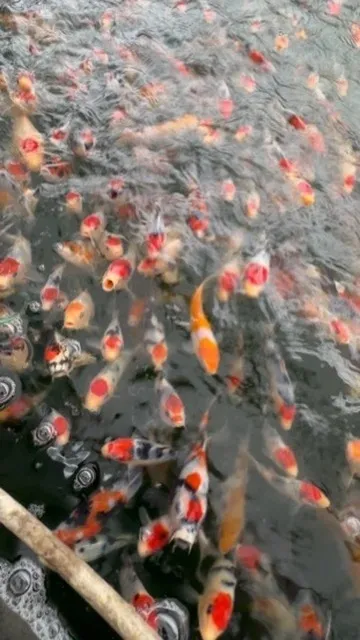
Alright, diving right into the world of Koi health! Understanding the nuances of Koi behavior is crucial for any keeper looking to maintain a thriving pond. The first step towards this is keen observation. Spending time with your Koi during feeding not only fosters a bond but also allows you to monitor their well-being closely.
Behavioral signs can be subtle indicators of underlying health issues in Koi. Here are some key behaviors to watch out for:
Koi are typically graceful swimmers. Changes in their swimming behavior such as listlessness, erratic movements, staying near the water surface, laying at the bottom of the pond or inability to control buoyancy each indicate different causes and are signs of distress.
Just like any other animal, Koi communicate through body language. Signs like flashing (rapidly rubbing against objects), twitching, or unusual postures may suggest discomfort or irritation. Flashing is definitely the easiest to spot and is a tell-tale sign of distress, you definitely should keep a keen eye on a Koi that flashes more than once.
Koi are social creatures and tend to swim in schools, even though they are not typically schooling fish. A sudden change in their social behavior, like isolation from other fish could be a big red flag.
A healthy Koi is usually eager to feed. A sudden loss of appetite or disinterest is definite signal of a health issue.
While Koi can be calm at times, a drastic decrease in activity levels, where they all become lethargic and spend more time at the bottom of the pond, could indicate health problems, water quality issues or worse an outbreak.
Observing how your Koi breathe is crucial. Rapid or labored breathing, gasping at the water surface, or spending prolonged periods at the surface gulping for air could indicate respiratory issues, water quality issues and calls for urgent response.
If you notice your Koi rubbing against surfaces or flicking their bodies against objects, it could be a sign of parasites or skin irritation. Having a student microscope with at least a capability of 500-100x can alleviate you of the pressures of assuming and give you concrete answers as to what could be wrong with the particular koi. If all of them are behaving line this, it is most definitely a break out parasites such as gill flukes or a mass water quality issue that could be caused by rain or a sudden change in water parameters.
That’s a rough overview of basics of understanding youre Koi’s Body language. We will dive further into these points one at a time.
Next, let’s touch on the importance of water quality in relation to Koi health.
Water Quality and Its Impact
Water quality plays a pivotal role in maintaining the health and well-being of your koi! I like to say we must first be keepers of great water before we can be great Koi keepers. It directly impacts their immune system, stress levels, and overall vitality. It would be very beneficial for you to maintain a log for weekly water tests so you’re able analyze that information to get priceless insights into the ecosystem of you’re pond. Here’s how different aspects of water quality can affect your Koi:
Koi thrive in slightly alkaline water with a pH range between 7.0 and 8.5. Fluctuations outside this range can stress the fish and make them susceptible to diseases. A drastic change in Ph can affect the toxicity of the ammonia in the system. Ph tests are often overlooked but are inexpensive to obtain.
These are toxic byproducts of fish waste and uneaten food. High levels of ammonia or nitrites can cause stress, respiratory issues, and even death in Koi. Regular monitoring and adequate filtration are essential to keep these levels in check. If you are unaware of the ammonia cycle and the effects of beneficial bacteria we will learn all about that soon!
Adequate oxygenation is crucial for Koi health, especially in warmer ponds when dissolved oxygen levels can drop. Insufficient oxygen can lead to stress, reduced immunity, and even immediate fatalities. Having a superb aerator that is connected to power backup is a must for every koi keeper in case of emergencies where wet pets can often be lost.
Koi are cold-water fish and thrive in temperatures between 15°C to 25°C (59°F to 77°F). Extreme temperatures, either too hot or too cold, can weaken their immune system and make them more susceptible to diseases. At higher temperatures the metabolism increases drastically, subsequently promoting rapid growth but also loss of pigmentation and premature egg development. Additionally Koi tent to live longer in colder water and age at a rapid rate in warmer temperatures. They are also have the ability to go into a state of hibernation and are able to sustain in deep ponds through freezing winters but in these cases feeding should be negligible and aeration should be ensured.
Contaminants like heavy metals, pesticides, and chlorine can be fatal to Koi. Ensure that the water source is free from these substances or use appropriate dechlorinates and water conditioners. As a hobbiest I always preffered the product SeaChem Safe, but there are countless more cost effective options. Maturing water or simple Aerating the water intended for the pond for a 24-48 hour period can also alleviate a lot these issues.
Regular maintenance of the pond, including debris removal, algae control, and periodic water changes as per the systems specs, helps maintain water quality. Accumulation of organic matter can degrade water quality and stress the fish. Cleaning youre filters as regularly as possible is best thing you can do for youre koi. We assume that the filter is cleaning the pond but in reality the waste is still in the system as long as its in the filter. So make a routine, clean youre filters as regularly as possible and watch as youre water starts to sparkle! ( Basic Tip- Always clean media in pond water and not fresh water!)
By regularly testing and maintaining optimal water conditions, you provide a healthy environment where Koi can thrive and minimize the risk of diseases. Next, we’ll delve into common signs of diseases and ailments in Koi. I hope you enjoyed this first read!
Based in Pune, we proudly serve koi lovers across Mumbai, Pune, Nashik, and all of Pan India—with Nishikigoi Direct Delivery available worldwide.
Ready to build your dream koi pond or add stunning Japanese koi to your collection?Call us, visit our facility in Pune, or explore global delivery options.